Walk into almost any online store today, and you’ll probably notice something interesting before you reach the payment page. Alongside Visa, Mastercard, and PayPal, you’ll often see options like Buy Now Pay Later (BNPL) from providers such as Klarna, Affirm, Afterpay, or Zip.
A few years ago, credit cards dominated almost every purchase. Today, younger shoppers are making different choices. Many prefer splitting payments into smaller instalments instead of carrying a revolving credit card balance. It’s one of the biggest shifts happening in consumer finance, and it raises an important question:
Is BNPL actually better than a traditional credit card, or does it simply create a different kind of financial risk?
The answer isn’t as straightforward as many social media videos suggest.
For some people, BNPL can be a useful budgeting tool when used responsibly. For others, a credit card remains the better option because it helps build a long-term credit history and often includes stronger consumer protections.
Rather than declaring one option the winner, this guide looks at both sides so you can decide which fits your financial situation.
Disclaimer: This article is for educational purposes only and should not be considered financial advice. Lending terms, interest rates, and credit policies vary by provider. Always review official terms before applying for any financial product.
Why Gen Z Is Rethinking Traditional Credit Cards
Older generations often viewed a credit card as an essential financial milestone. It represented independence, convenience, and the opportunity to build credit.
Gen Z has grown up under different economic conditions.
Many young adults entered adulthood during periods of:
- Higher inflation
- Rising housing costs
- Increasing student loan balances
- Expensive borrowing costs
- Greater awareness of personal finance
Because of this, many shoppers prefer knowing exactly when a purchase will be fully paid off instead of carrying an open-ended balance.
That doesn’t necessarily mean credit cards are bad—it simply reflects changing financial priorities.
What Is Buy Now, Pay Later (BNPL)?
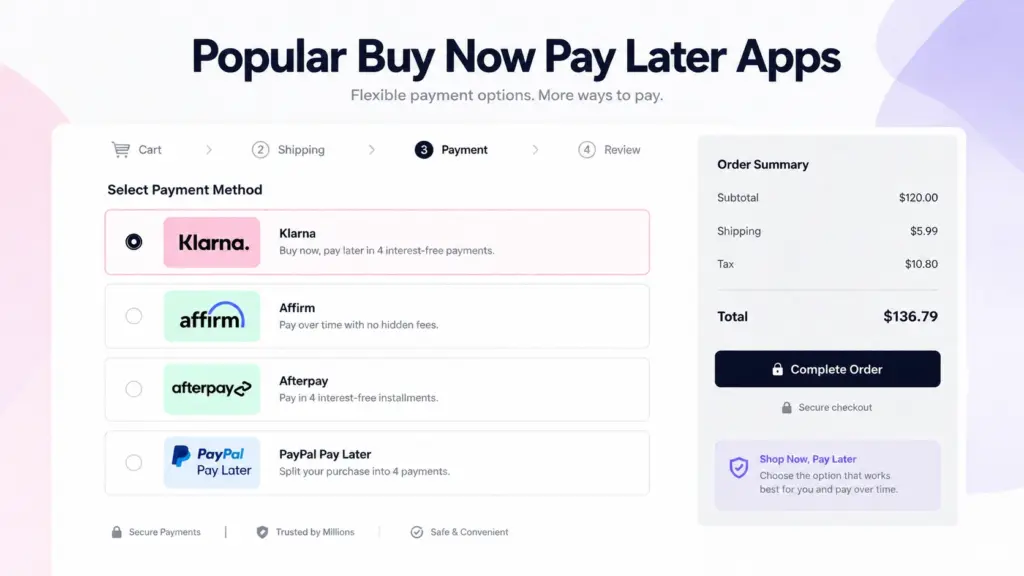
Buy Now, Pay Later is a short-term financing option that allows customers to purchase products immediately and spread payments over several instalments.
One of the most common plans is known as Pay in 4.
Here’s how it usually works:
- Purchase an item online or in-store.
- Pay the first instalment at checkout.
- The remaining payments are automatically deducted over several weeks.
Many BNPL providers advertise interest-free instalment plans for eligible purchases, although longer financing options or missed payments may involve additional costs depending on the provider.
The simplicity of this payment model explains why BNPL has become increasingly popular for online shopping.
Why BNPL Has Become So Popular
BNPL isn’t growing simply because it’s new.
Several practical reasons explain its popularity.
Predictable Payments
Instead of receiving one large monthly bill, shoppers know the exact payment schedule before completing the purchase.
Faster Approval Process
Many BNPL providers use a simplified approval process for smaller purchases, making checkout faster than traditional lending in some situations.
Easy Integration with Online Shopping
Major retailers now integrate BNPL directly into their checkout process, reducing the need for additional applications during purchase.
Budget Flexibility
For planned purchases, spreading payments across several weeks may help manage monthly cash flow.
That said, payment flexibility should never become an excuse for spending beyond your budget.
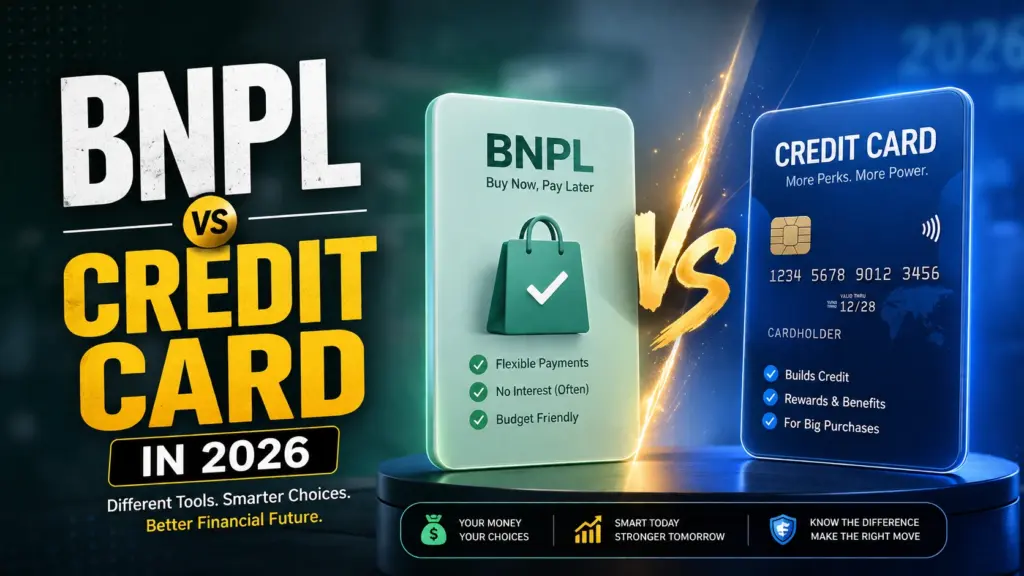
BNPL vs Credit Card: Understanding the Difference
Although both allow you to delay payment, they work very differently.
| Feature | BNPL | Credit Card |
| Payment Structure | Fixed installments | Revolving credit line |
| Interest | Often 0% on eligible short-term plans | May apply if balance isn’t paid in full |
| Repayment Period | Usually fixed | Flexible monthly payments |
| Credit Building | Varies by provider | Commonly contributes to credit history when managed responsibly |
| Purchase Approval | Individual purchase approval | Ongoing credit limit |
At first glance, BNPL appears simpler.
But simplicity doesn’t automatically make it the better financial choice.
Choosing between BNPL and a credit card depends on your spending habits, repayment discipline, and long-term financial goals.
Here’s the Bigger Issue Most People Ignore
The debate isn’t really about BNPL vs Credit Card.
It’s about spending behaviour.
Someone who regularly buys items they cannot comfortably afford may run into financial problems regardless of which payment method they choose.
A credit card can create long-term revolving debt if balances aren’t paid.
BNPL can create multiple overlapping instalment plans that become difficult to track.
The payment tool isn’t always the problem.
Sometimes the buying habits deserve more attention than the payment method itself.
Klarna vs Affirm: Which One Fits Your Spending Style?
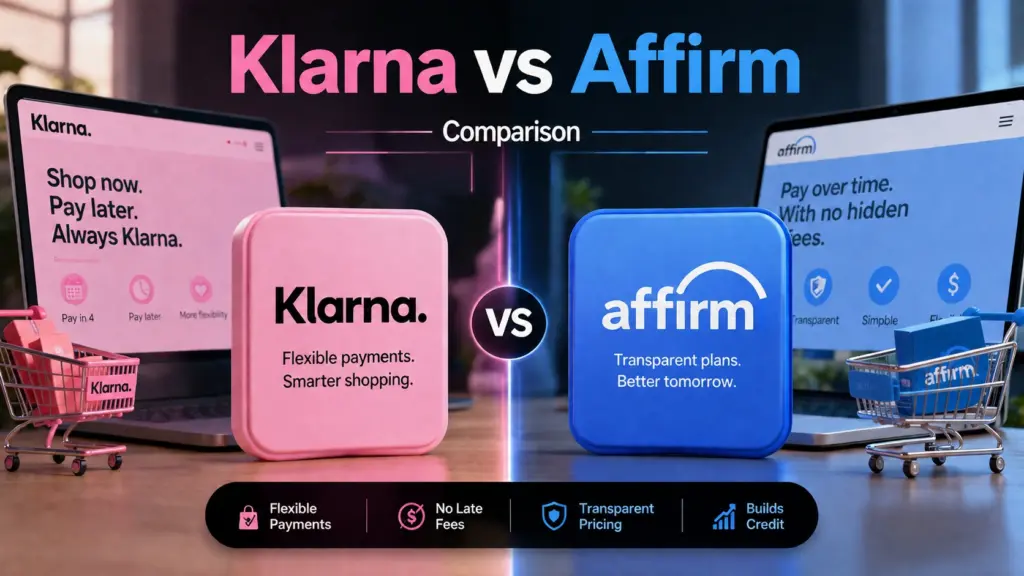
When people compare Klarna vs Affirm, they’re usually trying to answer a simple question:
“Which app is better for everyday shopping?”
The truth is that both platforms serve different purposes. Neither is universally better—it depends on what you’re buying and how you plan to repay it.
Let’s look at the differences.
| Feature | Klarna | Affirm |
| Best For | Fashion, beauty, everyday shopping | Electronics, furniture, travel, larger purchases |
| Short-Term Installments | Yes | Yes |
| Longer Financing Options | Limited | Extensive |
| Interest-Free Plans | Available for eligible purchases | Available on selected purchases |
| Late Fees | May apply depending on plan and region | No late fees on many plans (check current terms) |
| Credit Check | Depends on financing option | Depends on financing option |
One thing that surprised many shoppers is that both companies offer more than “Pay in 4.” Depending on the retailer, you may also see longer monthly financing plans.
That’s why reading the checkout terms carefully matters before confirming a purchase.
Best Buy Now Pay Later Apps in the United States
The BNPL market has expanded rapidly over the last few years. Today, shoppers have several well-known providers to choose from.
Klarna
Klarna remains one of the most recognised names in the Buy Now Pay Later industry.
Popular features include:
- Pay in 4 instalments.
- Shopping app
- Price drop notifications
- Rewards program
- Large retailer network
Klarna is especially common for fashion, beauty, and lifestyle purchases.
Affirm
Affirm focuses more on medium and large purchases.
Many retailers use Affirm for:
- Laptops
- Smartphones
- Fitness equipment
- Furniture
- Travel bookings
Instead of relying only on short instalment plans, Affirm also offers longer repayment options for eligible purchases.
Afterpay
Afterpay has become popular among younger shoppers because of its straightforward instalment model.
Its platform encourages responsible spending by setting purchase limits based on payment history.
PayPal Pay in 4
Many shoppers already use PayPal for online payments.
PayPal Pay in 4 allows eligible users to divide purchases into four instalments without opening a completely separate shopping account.
For existing PayPal customers, this convenience is one of its biggest advantages.
Zip
Zip offers another flexible BNPL option.
Unlike some competitors that partner only with specific retailers, Zip can often be used at a broader range of stores, depending on availability and eligibility.
Does Buy Now Pay Later Build Credit?
This is one of the most common questions people ask before using BNPL.
The answer is:
It depends on the provider and the financing option you choose.
Some short-term instalment plans may not be reported to major credit bureaus.
Certain longer financing products offered by some providers may report payment activity.
Because policies continue to evolve, it’s important to verify the latest reporting practices directly with the provider before assuming BNPL will help build your credit history.
If improving your credit score is your primary goal, a responsibly managed traditional credit card may still play a more consistent role.
BNPL vs Credit Card: Pros and Cons
| BNPL | Credit Card |
| ✔ Predictable installment payments | ✔ Helps build long-term credit history |
| ✔ Often offers interest-free short-term plans | ✔ Rewards, cashback, and travel benefits |
| ✔ Simple checkout experience | ✔ Strong fraud protection |
| ✔ Useful for planned purchases | ✔ Accepted almost everywhere |
| ❌ Easy to open multiple payment plans | ❌ High interest if balances aren’t paid in full |
| ❌ Limited rewards | ❌ Revolving debt can grow quickly |
| ❌ May not always help build credit | ❌ Credit utilization affects your score |
A Practical Shopping Example
Imagine you’re buying a $600 laptop.
With a traditional credit card, you might choose to pay the full amount immediately or spread payments over several months. If you carry the balance, interest charges could increase the total cost.
With an eligible BNPL plan, the purchase might be divided into fixed instalments with clear repayment dates. If the plan is interest-free and every payment is made on time, the total amount paid may remain the original purchase price.
Here’s the catch: if you already have several active instalment plans, adding another purchase, even one that seems affordable, can make your monthly budget harder to manage.
That’s why the best financing option isn’t always the one with the lowest monthly payment. It’s the one that fits comfortably within your overall budget.
When Does BNPL Make Sense?
Buy Now Pay Later may be worth considering when:
- You already planned the purchase.
- You understand the repayment schedule.
- The instalment fits comfortably into your monthly budget.
- You can complete every payment on time.
- The financing terms are clearly explained.
Used responsibly, BNPL can provide payment flexibility.
Used carelessly, it can lead to the same financial stress people often associate with credit cards.
The Hidden Risks of Buy Now, Pay Later
Buy Now, Pay Later can make shopping feel easier, but convenience isn’t always the same as affordability.
Here’s the bigger issue: the smaller payment amount often gets more attention than the total purchase price.
Imagine seeing a pair of sneakers priced at $240. Paying the full amount might make you stop and think. Seeing “Only four payments of $60” feels much more manageable, even though you’re still spending the same amount.
That’s why financial experts often recommend asking one simple question before choosing any payment option:
“Would I still buy this if I had to pay the full amount today?”
If the answer is no, it may be worth waiting.
Common Beginner Mistakes
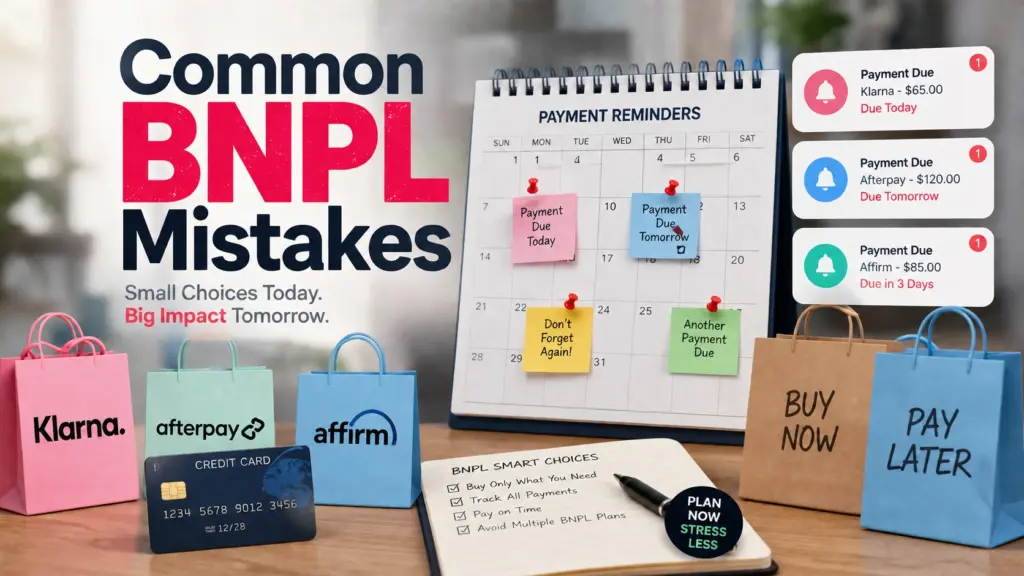
Many first-time BNPL users don’t get into financial trouble because of one large purchase. It usually happens through several small decisions made over time.
1. Managing Too Many Instalment Plans
One payment plan is easy to remember.
Five active payment plans across different apps become much harder to track.
Small deductions spread throughout the month can quietly reduce the money available for rent, groceries, or savings.
2. Missing Automatic Payments
Most BNPL services automatically withdraw payments from your linked account.
If there isn’t enough money available, you could face:
- Missed payments
- Late fees (depending on the provider)
- Account restrictions
- Collection activity in serious cases
Setting calendar reminders or enabling banking notifications can help avoid surprises.
3. Treating BNPL Like Free Money
This is probably the biggest mistake.
BNPL doesn’t reduce the cost of a purchase.
It simply changes when you pay.
Before using any instalment plan, make sure the total purchase still fits comfortably within your monthly budget.
4. Ignoring Your Long-Term Financial Goals
It’s easy to focus on today’s purchase and forget tomorrow’s priorities.
Saving for goals such as:
- Building an emergency fund
- Buying a home
- Paying student loans
- Investing for retirement
often creates greater long-term value than financing another discretionary purchase.
BNPL vs Credit Card: Which Helps Build Better Financial Habits?
People often compare interest rates, rewards, and payment options.
Those are important.
But healthy financial habits usually matter even more.
Ask yourself:
- Do I regularly pay bills on time?
- Do I follow a monthly budget?
- Am I buying something I truly need?
- Can I comfortably afford every future payment?
If the answer to any of these questions is “not really,” the payment method isn’t the biggest issue.
Building consistent money habits will usually have a greater impact than choosing one financing option over another.
What I Would Choose With $1,000
If someone handed me $1,000 to manage for everyday spending, I wouldn’t use all of it for shopping simply because financing options are available.
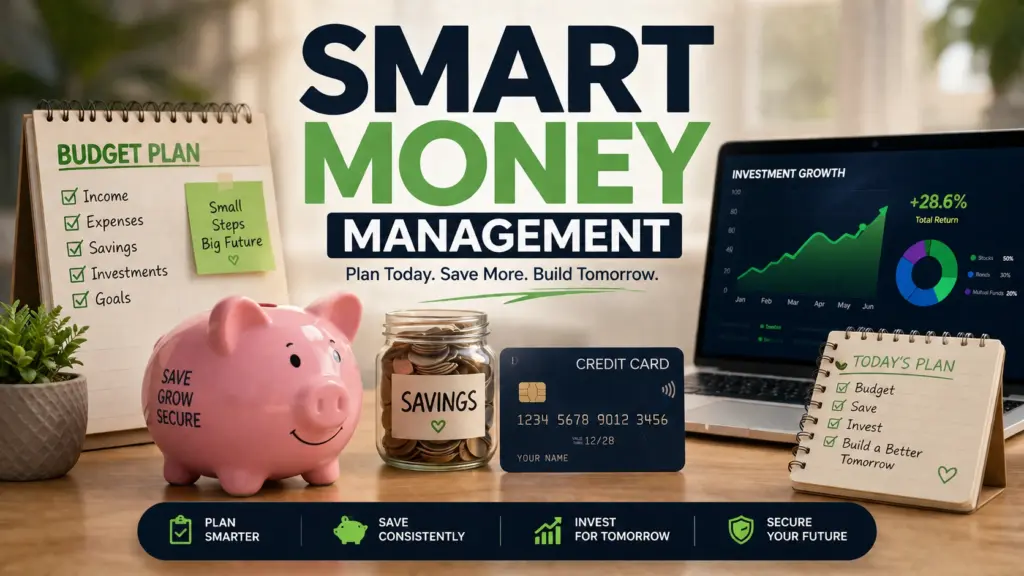
A practical approach might look like this:
| Purpose | Amount |
| Emergency savings | $400 |
| Essential monthly expenses | $300 |
| Long-term investing | $200 |
| Planned discretionary spending | $100 |
If I decided to use BNPL, it would only be for a purchase that was already part of my budget—not as a reason to buy something extra.
The goal isn’t to avoid financing completely.
The goal is to make financing work for your budget, not against it.
Should You Choose BNPL or a Credit Card?
There’s no single answer that works for everyone.
BNPL may be a practical choice if:
- You prefer fixed repayment schedules.
- You can comfortably meet every payment.
- You’re making a planned purchase.
- You understand the provider’s terms.
A credit card may make more sense if:
- You’re focused on building a long-term credit history.
- You pay your balance in full each month.
- You want rewards or cashback.
- You value additional purchase protection.
The better option depends less on the product itself and more on how responsibly it’s used.
A Balanced Approach
Many financially responsible consumers don’t rely exclusively on one payment method.
Instead, they use each tool for different purposes.
For example:
- A credit card might be used for recurring monthly bills that are paid in full each month.
- BNPL could be reserved for occasional planned purchases with predictable repayment schedules.
Using both thoughtfully can provide flexibility while reducing the risk of unnecessary debt.
Conclusion
The debate around BNPL vs Credit Card isn’t about choosing a winner—it’s about choosing the right tool for the right situation.
Buy Now, Pay Later has made shopping more flexible, especially for people who prefer fixed instalment payments and want to avoid carrying a revolving balance. At the same time, traditional credit cards continue to offer valuable benefits like credit building, rewards programs, fraud protection, and wider acceptance.
The bigger lesson is simple: no payment method can replace good financial habits.
If you budget carefully, understand the repayment terms, and borrow only what you can comfortably repay, either option can fit into a healthy financial plan. On the other hand, poor spending habits can create financial stress regardless of which payment method you choose.
Before making your next purchase, take a moment to ask yourself:
- Is this something I genuinely need?
- Can I comfortably afford every payment?
- Does this purchase fit within my monthly budget?
- Am I borrowing for convenience or because I can’t afford it today?
Those questions often matter more than whether you choose BNPL or a credit card.
Frequently Asked Questions (FAQs)
Is Buy Now Pay Later better than a credit card?
It depends on your financial goals. BNPL may work well for planned purchases with fixed repayments, while a credit card can be more suitable for building credit history, earning rewards, and handling ongoing expenses responsibly.
Does Buy Now Pay Later build credit?
Some providers report certain financing products to credit bureaus, while others do not. Reporting policies vary, so it’s important to check directly with the provider before assuming BNPL will improve your credit score.
What happens if I miss a BNPL payment?
The consequences depend on the provider. Missed payments may result in late fees, account restrictions, collection activity, or credit reporting for some financing products. Always review the provider’s terms before using any BNPL service.
Which is better: Klarna or Affirm?
Both platforms serve different needs. Klarna is commonly used for everyday retail purchases, while Affirm often supports larger purchases with longer repayment options. The better choice depends on the retailer, financing terms, and your personal budget.
Can I use both BNPL and a credit card?
Yes. Many consumers use both responsibly. For example, a credit card may be useful for recurring monthly expenses paid in full, while BNPL can be reserved for occasional planned purchases with fixed repayment schedules.
Will using BNPL affect my credit score?
It can, depending on the provider, the financing product, and your payment history. Because reporting practices continue to evolve, always review the latest information from the provider before applying.
Is BNPL safer than using a credit card?
Both payment methods include advantages and risks. Security, consumer protections, and dispute processes vary by provider, so reviewing the terms before making a purchase is always recommended.
Official Sources
For the latest policies and consumer guidance, refer to these official resources:
- Consumer Financial Protection Bureau (CFPB)
https://www.consumerfinance.gov/ - Federal Trade Commission (FTC)
https://www.ftc.gov/ - Experian
https://www.experian.com/ - Klarna
https://www.klarna.com/ - Affirm
https://www.affirm.com/ - PayPal Pay Later
https://www.paypal.com/
Internal Linking Suggestions
Connect this article with related content on Solvibex:
- How to Raise Your Credit Score Fast in 2026
- Best Personal Finance Tips for Beginners
- Personal Finance Money Management Guide
- Best Passive Income Ideas in 2026
- Top AI Stocks to Watch in 2026
These internal links help readers explore related topics while strengthening your site’s SEO structure.
About the Author
Mehul Patel is the founder of Solvibex.com, where he writes research-driven content on personal finance, investing, artificial intelligence, and digital technology. His articles simplify complex financial topics into practical, easy-to-understand guides that help readers make informed decisions.
Disclaimer
This article is intended for informational and educational purposes only. It should not be considered financial, legal, or investment advice. Financial products, lending policies, interest rates, fees, and eligibility requirements vary by provider and may change over time. Always review official documentation and consider your personal financial circumstances before making borrowing decisions.