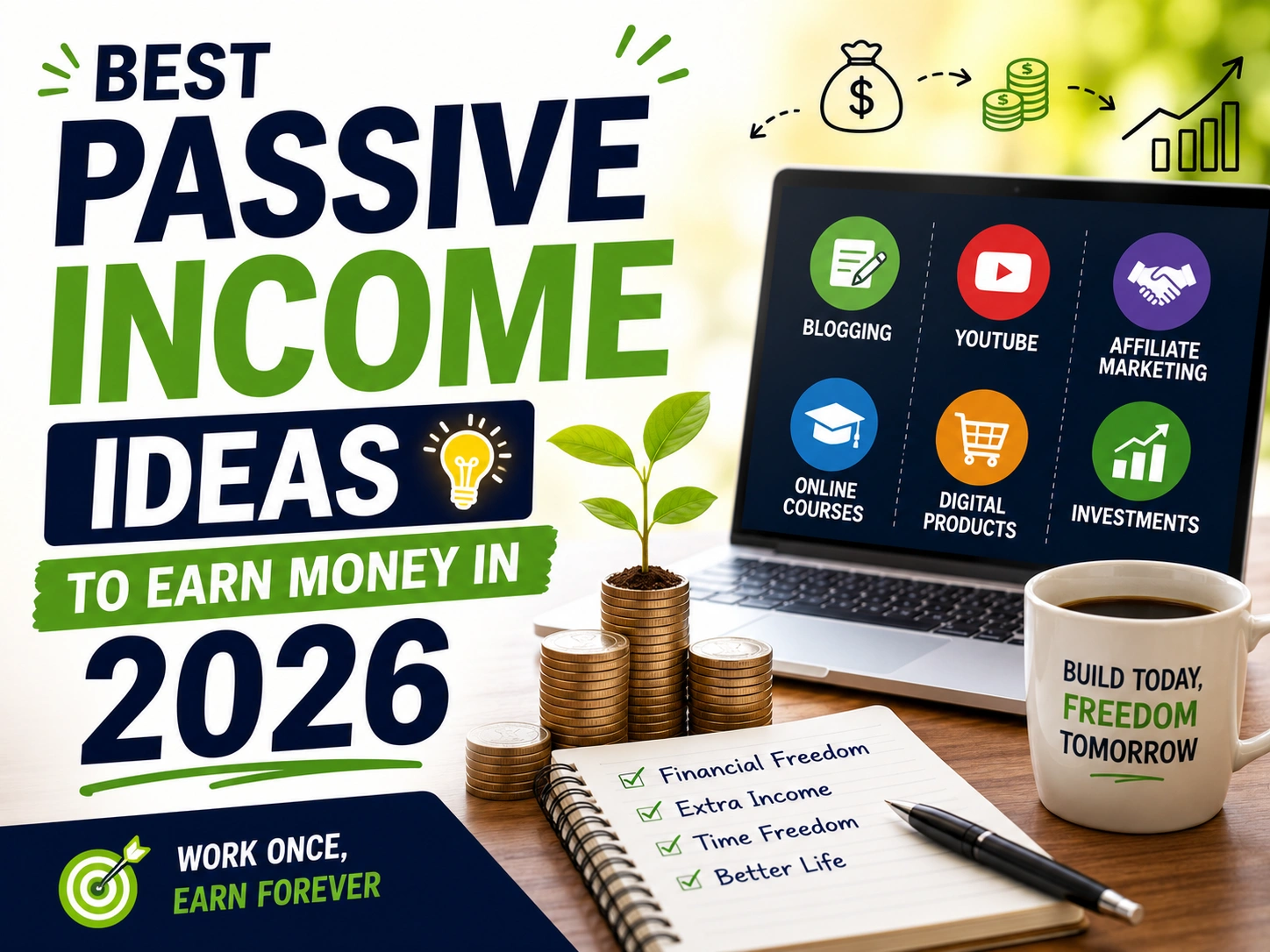
Building passive income has become an important financial goal for many people in the United States. Rising living costs, changing job markets, and new digital opportunities have prompted individuals to seek additional income streams to support their long-term financial goals.
Passive income doesn’t mean earning money without effort. Most passive income sources require an initial investment of time, money, or skills before they begin generating ongoing returns. Once established, however, they may provide income with less day-to-day involvement than a traditional job.
In this guide, we’ll explore some of the best passive income ideas for 2026, explain how each method works, discuss potential risks, and help you decide which opportunities may be suitable for your financial situation.
Disclaimer: This article is for educational purposes only and should not be considered financial or investment advice. Returns vary depending on market conditions, individual decisions, and risk tolerance.
What Is Passive Income?
Passive income refers to money earned from assets or activities that require limited ongoing effort after the initial setup.
Unlike a traditional salary, passive income may continue even when you’re not actively working every day. However, building reliable passive income usually requires planning, patience, and consistency.
Common examples include:
- Dividend-paying investments
- Rental properties
- Digital products
- Affiliate marketing
- Royalties
- High-yield savings accounts
Many successful investors combine several passive income sources rather than relying on a single one.
Why Passive Income Matters in 2026

Economic conditions continue to evolve, making financial flexibility increasingly valuable.
Some reasons people are exploring passive income opportunities include:
Rising Living Costs
Inflation can reduce purchasing power over time. Additional income streams may help offset increasing everyday expenses.
Income Diversification
Dependence on a single paycheck may increase financial risk.
Multiple income sources can provide greater stability during unexpected events such as job changes or economic slowdowns.
Long-Term Wealth Building
Certain passive income strategies, such as dividend investing or real estate, may contribute to long-term wealth when combined with disciplined financial planning.
Greater Financial Flexibility
Additional income may help fund retirement savings, education, travel, or other personal financial goals.
1. Dividend Investing
Dividend investing remains one of the most popular passive income strategies for long-term investors.
Some companies distribute a portion of their profits to shareholders through regular dividend payments.
How It Works
You purchase shares of companies that pay dividends.
If the company continues paying dividends, eligible shareholders may receive periodic cash payments while also benefiting from potential long-term share price appreciation.
Potential Advantages
- Opportunity for recurring income
- Long-term investment growth
- Dividend reinvestment options
- Suitable for diversified portfolios
Things to Consider
Dividend payments are not guaranteed and may change based on the company’s performance and market conditions.
2. Real Estate Investing
Real estate has remained a popular long-term investment for many years.
Depending on your budget and experience, there are several ways to participate.
Common Options
- Residential rental properties
- Commercial real estate
- Real Estate Investment Trusts (REITs)
- Short-term vacation rentals (where permitted)
Potential Benefits
- Rental income
- Possible property appreciation
- Portfolio diversification
Risks
Real estate investments may involve maintenance costs, vacancies, financing expenses, taxes, and market fluctuations. Research is essential before investing.
3. Affiliate Marketing
Affiliate marketing has become one of the most accessible passive income opportunities for content creators, bloggers, and website owners.
Instead of creating your own product, you promote products or services offered by other companies. When someone makes a qualifying purchase through your affiliate link, you may earn a commission.
Although creating quality content requires ongoing effort in the beginning, well-ranked articles, videos, or reviews can continue generating traffic and commissions over time.
Common Affiliate Platforms
- Amazon Associates
- ShareASale
- CJ Affiliate
- Impact
- PartnerStack
Best For
- Bloggers
- YouTubers
- Website owners
- Social media creators
Advantages
- Low startup cost
- No inventory management
- Flexible working schedule
- Multiple earning opportunities
Things to Consider
Affiliate income depends on traffic, audience trust, and product relevance. Focus on recommending products that genuinely provide value rather than promoting everything for commissions.
4. Selling Digital Products
Digital products remain one of the most scalable passive income ideas in 2026.
Unlike physical products, digital products don’t require shipping or inventory management. After creating the product, it can be sold repeatedly through online marketplaces or your own website.
Popular Digital Products
- E-books
- Online courses
- Printable planners
- Resume templates
- Design templates
- Stock photography
- Digital art
- Software tools
Benefits
- High profit margins
- Global customer reach
- One-time creation with repeated sales potential
- Easy to update over time
Challenges
Creating high-quality digital products requires research, planning, and marketing. Success usually depends on solving a real problem for your target audience.
5. YouTube Content Creation
YouTube remains one of the largest platforms for building long-term passive income.
Educational videos, tutorials, reviews, travel content, finance tips, and technology guides can continue attracting viewers long after publication.
Creators may generate revenue through several sources.
Potential Income Streams
- Advertising revenue
- Affiliate marketing
- Brand sponsorships
- Channel memberships
- Digital product sales
Why It Works
Evergreen videos that answer common questions can continue receiving views for months or even years.
The focus should be on creating useful, high-quality content rather than chasing short-term trends.
6. High-Yield Savings Accounts
Not everyone wants to invest in the stock market or real estate.
For people seeking lower-risk options, high-yield savings accounts may provide modest passive income through interest while keeping funds relatively accessible.
Benefits
- Lower investment risk
- Easy to open
- Liquidity for emergency savings
- FDIC insurance for eligible U.S. banks (subject to applicable limits)
Best For
- Emergency funds
- Short-term financial goals
- Conservative investors
Although returns are generally lower than stocks, these accounts may play an important role in a balanced financial plan.
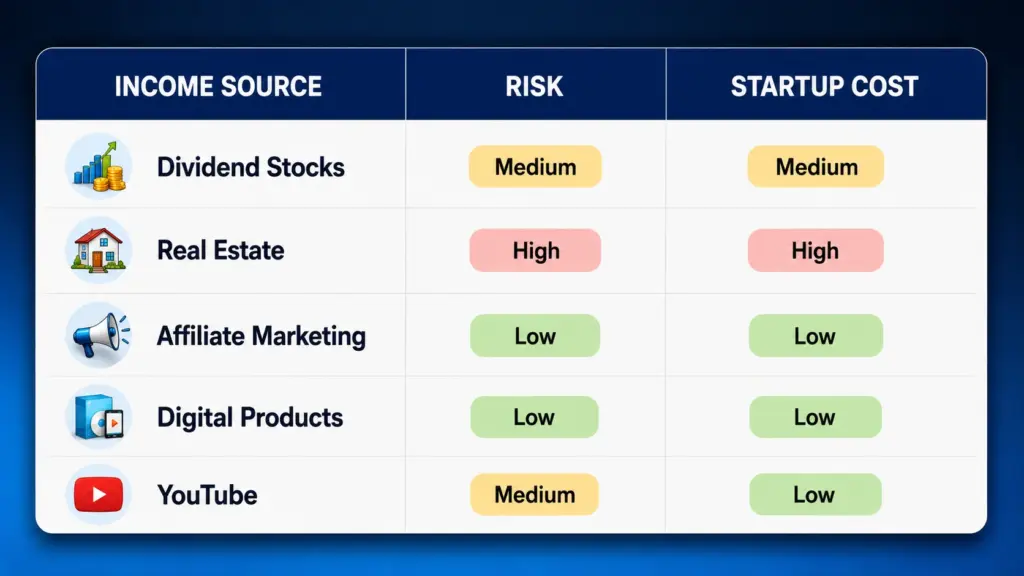
Comparing Popular Passive Income Ideas
Which Passive Income Idea Is Right for You?
The best passive income strategy depends on your financial situation, available time, and long-term goals.
You might consider:
Students
- Affiliate marketing
- Digital products
- YouTube content
Working Professionals
- Dividend investing
- High-yield savings
- REITs
- Affiliate websites
Business Owners
- Online courses
- Licensing digital assets
- Investment portfolios
- Rental properties
Rather than relying on a single source, many successful investors gradually build multiple income streams.
Tips Before You Start
Before investing your money or time into any passive income strategy:
- Set realistic financial goals.
- Build an emergency fund first.
- Avoid “get-rich-quick” schemes.
- Research every investment thoroughly.
- Diversify your income sources rather than relying on a single method.
- Review your financial plan regularly as your goals change.
Common Mistakes to Avoid When Building Passive Income
Many beginners become interested in passive income because of videos or social media posts that promise quick wealth. In reality, successful passive income strategies usually require planning, patience, and consistent effort before they generate reliable returns.
Understanding these common mistakes can help you make better financial decisions.
Expecting Instant Results
One of the biggest misconceptions is that passive income starts immediately.
Most successful income streams require time to develop.
For example:
- A new blog may take several months to attract visitors.
- Dividend investments require capital before generating meaningful income.
- Rental properties involve purchasing, maintenance, and tenant management.
- Digital products often need marketing before they begin making consistent sales.
Treat passive income as a long-term financial strategy rather than a shortcut to wealth.
Investing Without Research
Every investment carries some level of risk.
Before investing your money, understand:
- How the investment works
- Potential risks
- Expected costs
- Tax implications
- Long-term return potential
Never invest simply because a trend is popular on social media.
Depending on One Income Source
Relying on only one passive income method may increase financial risk.
For example, if all your income comes from a single website or rental property, unexpected changes could significantly affect your earnings.
Many experienced investors diversify across several income sources, such as:
- Dividend investments
- Digital products
- Affiliate marketing
- Real estate
- High-yield savings
- Content creation
Diversification may improve financial stability over the long term.
Ignoring Taxes and Expenses
Passive income isn’t always “free money.”
Depending on the income source, you may need to consider:
- Income taxes
- Property maintenance
- Platform fees
- Advertising costs
- Investment management fees
- Software subscriptions
Understanding these expenses helps you estimate your actual profit more accurately.
Building Multiple Passive Income Streams

Instead of focusing on a single opportunity, many people gradually build several complementary income sources.
For example:
Year 1
- Build an emergency fund.
- Open a high-yield savings account.
- Start investing regularly
Year 2
- Launch a blog or YouTube channel.
- Begin affiliate marketing
- Create your first digital product.
Year 3
- Expand your investment portfolio.
- Consider dividend-focused investments
- Explore REITs or rental property opportunities if appropriate.
This gradual approach can help reduce financial risk while allowing your income sources to grow over time.
Choosing the Right Passive Income Strategy
Not every opportunity is suitable for every person.
Before choosing a strategy, ask yourself:
- How much money can I invest?
- How much time can I dedicate initially?
- What skills do I already have?
- Am I comfortable with investment risk?
- What are my long-term financial goals?
Your answers can help you identify opportunities that match your situation.
Can You Build Passive Income With a Small Budget?
Yes. Many passive income ideas have relatively low startup costs.
Examples include:
- Writing an eBook
- Starting a niche blog
- Affiliate marketing
- Selling printable templates
- Creating digital downloads
- Investing small amounts regularly through diversified funds (where available)
Starting small allows you to learn while reducing financial risk.
Long-Term Wealth Is Built Through Consistency
Passive income rarely creates overnight success.
Instead, long-term financial growth often comes from:
- Consistent saving
- Regular investing
- Creating valuable content
- Reinvesting earnings
- Diversifying income sources
- Continuing to learn about personal finance
Many financially successful people focus on steady progress rather than short-term gains.
Passive Income vs Active Income
Active Income Passive Income Earned by working regularly Earned from assets or established systems Stops if you stop working May continue after initial setup Examples: Salary, freelancing Examples: Dividends, rental income, affiliate commissions, digital products
Understanding the difference between these two income types can help you build a balanced financial plan.
Most people begin with active income and gradually build passive income alongside it.
Create a Financial Plan Before Investing
Before pursuing any passive income opportunity, consider creating a written financial plan.
Include:
- Monthly income
- Monthly expenses
- Savings goals
- Emergency fund target
- Investment budget
- Long-term financial objectives
Having a clear plan can help you make more informed financial decisions and avoid unnecessary risks.
Conclusion

Building passive income is a long-term financial strategy rather than a shortcut to wealth. Whether you choose dividend investing, real estate, affiliate marketing, digital products, or content creation, success usually comes from consistent effort, careful planning, and informed decision-making.
The best passive income ideas align with your financial goals, available budget, skills, and risk tolerance. Starting with one or two manageable income streams and gradually expanding over time can help you create a more stable financial future.
Remember that every investment and business opportunity carries some level of risk. Continue learning, diversify your income sources, and review your financial plan regularly to adapt to changing market conditions.
Frequently Asked Questions (FAQs)
1. What is the best passive income idea for beginners?
There isn’t a single best option for everyone. Beginners often explore dividend investing, high-yield savings accounts, affiliate marketing, digital products, or diversified investment funds based on their financial goals and available resources.
2. Can I build passive income with little money?
Yes. Some passive income ideas require relatively small upfront investments. Examples include affiliate marketing, blogging, digital products, and investing small amounts regularly through diversified investment options where available.
3. How long does passive income take to grow?
The timeline varies depending on the strategy. Investment income, digital businesses, and content creation often require months or years before generating meaningful long-term returns.
4. Is passive income completely hands-free?
No. Most passive income sources require initial work and occasional maintenance. For example, rental properties need management, blogs require updates, and investment portfolios benefit from periodic reviews.
5. What are the risks of passive income investments?
Risks depend on the investment type but may include market volatility, changing interest rates, business performance, property expenses, or reduced demand for digital products. Diversification can help manage risk.
6. Should I invest in only one passive income source?
Many financial professionals recommend diversifying income streams rather than relying on a single source. Diversification may reduce overall financial risk over time.
7. Are passive income earnings taxable?
Tax treatment depends on your country, income source, and personal circumstances. Consider consulting a qualified tax professional or reviewing your local tax authority’s guidance for accurate information.
8. How do I choose the right passive income strategy?
Consider your:
- Financial goals
- Budget
- Available time
- Skills
- Risk tolerance
- Investment knowledge
Choosing opportunities that match your situation is generally more sustainable than following short-term trends.
Key Takeaways
- Passive income requires planning and patience.
- Diversify income sources to reduce financial risk.
- Research every investment before committing money.
- Build an emergency fund before making major investments.
- Focus on long-term financial growth instead of quick profits.
- Review and adjust your financial plan regularly.
Official Sources
Use reliable resources for additional information:
- Investor.gov (U.S. SEC)
https://www.investor.gov/ - U.S. Securities and Exchange Commission (SEC)
https://www.sec.gov/ - Consumer Financial Protection Bureau (CFPB)
https://www.consumerfinance.gov/ - Internal Revenue Service (IRS)
https://www.irs.gov/ - Federal Reserve – Consumer Resources
https://www.federalreserve.gov/consumerscommunities.htm - FINRA Investor Education
https://www.finra.org/investors
Internal Linking Suggestions
Link this article to your related content:
- Best Personal Finance Tips for Beginners
- How to Raise Your Credit Score Fast
- Best Cash Apps That Pay via PayPal
- Top AI Stocks to Watch in 2026
About the Author
Mehul Patel is the founder of Solvibex.com, where he publishes research-driven articles on personal finance, investing, AI, online income opportunities, and financial technology. His goal is to simplify complex financial topics into practical guides that help readers make informed financial decisions.
Disclaimer
This article is for educational and informational purposes only. It does not constitute financial, investment, legal, or tax advice. Investment values may rise or fall, and past performance does not guarantee future results. Always conduct your own research or consult a qualified financial advisor before making financial decisions.