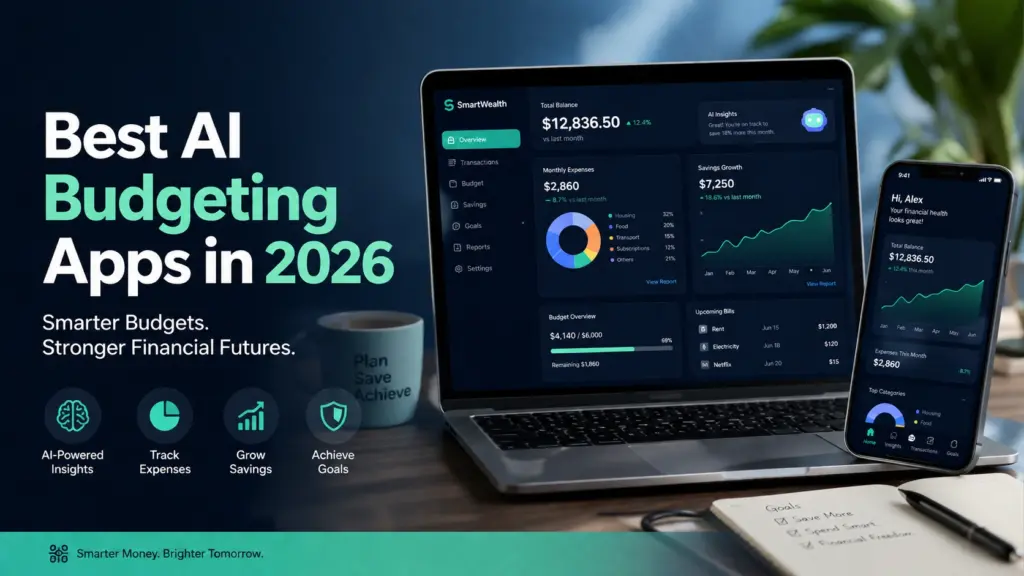
Managing personal finances has become more challenging than ever. Subscription services, digital wallets, online shopping, and multiple bank accounts make it difficult to understand where money goes each month. Traditional budgeting methods still work, but many people now prefer smarter tools that automate financial tracking and provide personalised insights.
This is where AI budgeting apps are changing personal finance. Instead of manually recording every expense, modern apps use artificial intelligence to categorise transactions, monitor spending habits, identify unusual activity, and suggest ways to improve your financial health.
Whether you’re building your first budget, paying off debt, saving for a home, or planning long-term investments, choosing the right budgeting app can simplify your financial decisions.
In this guide, we’ve reviewed some of the best AI budgeting apps available in 2026 based on features, ease of use, security, pricing, and overall value for everyday users.
Disclosure: Some budgeting apps mentioned in this guide offer paid plans. Always review pricing and features on the provider’s official website before subscribing.
What Are AI Budgeting Apps?
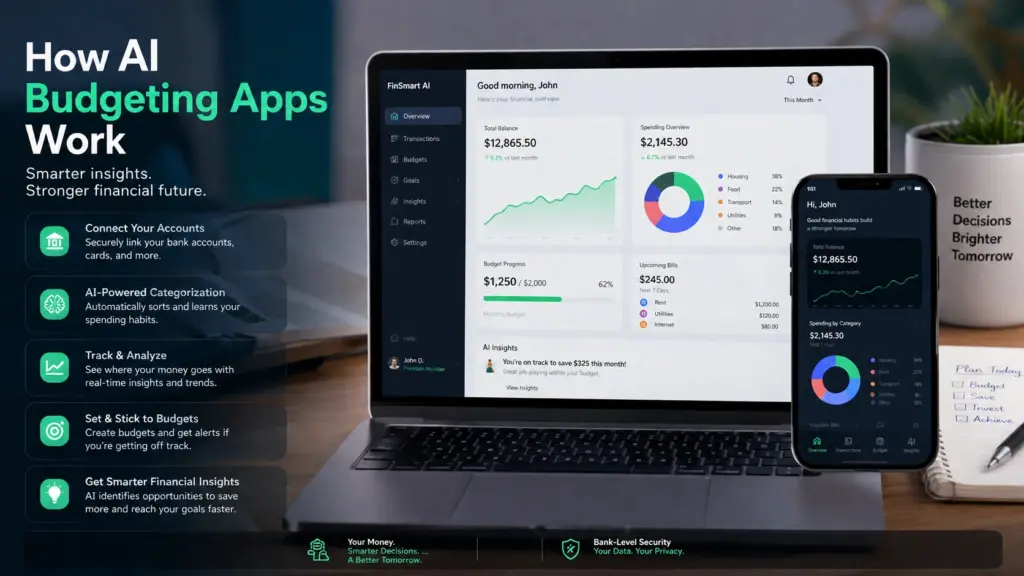
AI budgeting apps are personal finance applications that use artificial intelligence and automation to help users manage their money more efficiently.
Unlike traditional expense trackers, these apps automatically analyse your financial activity and generate useful recommendations based on your spending behaviour.
Depending on the platform, AI-powered budgeting apps may help you:
- Automatically categorize expenses
- Track monthly budgets
- Monitor subscriptions
- Predict upcoming bills
- Identify unnecessary spending
- Set personalised savings goals.
- Monitor cash flow
- Generate financial reports
Instead of spending hours maintaining spreadsheets, users receive real-time financial insights through a simple dashboard.
Why AI Budgeting Apps Are Growing in Popularity
Artificial intelligence has transformed many industries, including personal finance.
Millions of people now connect their bank accounts securely to budgeting apps that automatically organise financial information and reduce manual work.
Some of the biggest advantages include:
Automatic Expense Tracking
Transactions are imported and categorised automatically, reducing the need for manual data entry.
Smarter Budget Recommendations
Many apps analyse spending patterns and recommend realistic monthly budgets based on your income and lifestyle.
Subscription Monitoring
Forgotten subscriptions can quietly increase monthly expenses.
AI budgeting apps often identify recurring payments and help users decide which subscriptions are worth keeping.
Personalised Savings Insights
Instead of generic advice, AI tools analyse your spending history and recommend practical ways to save more money each month.
Financial Goal Tracking
Whether you’re saving for:
- an emergency fund,
- a vacation,
- a new car,
- or retirement,
many budgeting apps let you track progress through customizable financial goals.
If one of your goals is eliminating debt, our detailed guide on How to Pay Off Credit Card Debt Fast explains practical strategies to reduce interest costs and improve your financial health.
How We Selected These Apps
Rather than ranking apps based on popularity alone, we evaluated each platform using practical criteria that matter to everyday users.
Our comparison considered:
Ease of Use
A budgeting app should be simple enough for beginners while offering advanced features for experienced users.
AI Features
We looked for intelligent automation, spending analysis, financial insights, and personalised recommendations.
Security & Privacy
Financial information is highly sensitive.
Apps included in this guide use industry-standard security practices such as encryption and secure account connections.
Pricing
We compared both free and paid plans to determine overall value.
Platform Compatibility
We gave preference to apps available on Android, iPhone, and web browsers.
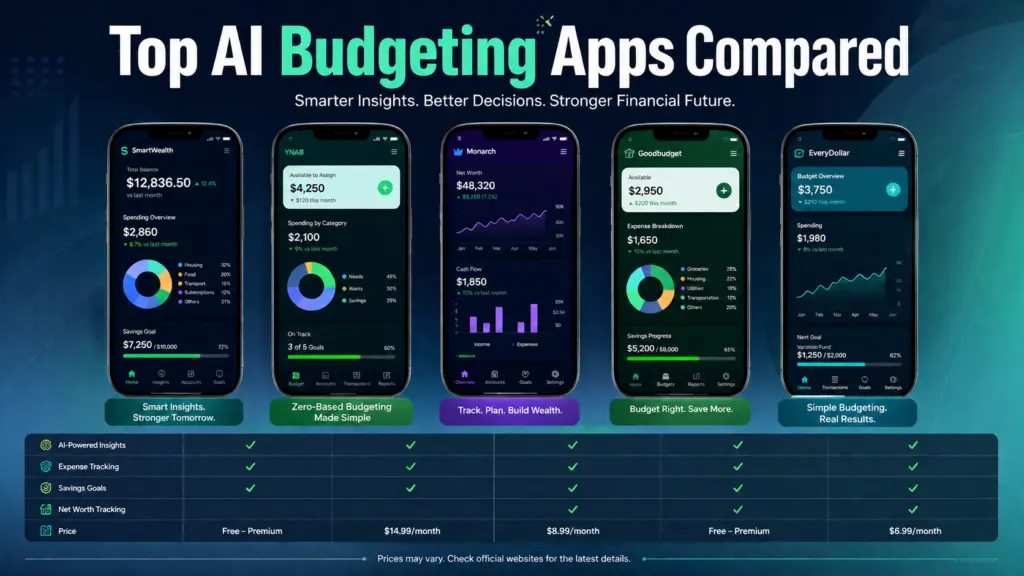
Quick Comparison Table
| Feature | AI Budgeting Apps | Traditional Budget Spreadsheet |
| Automatic Expense Tracking | ✅ | ❌ |
| AI Spending Analysis | ✅ | ❌ |
| Budget Recommendations | ✅ | ❌ |
| Subscription Tracking | ✅ | ❌ |
| Goal Tracking | ✅ | Limited |
| Manual Data Entry | Very Low | Very High |
| Real-Time Insights | ✅ | ❌ |
Why Trust This Guide?
At Solvibex, we focus on creating educational finance content that helps readers make informed financial decisions.
Instead of promoting every budgeting app available, this guide compares well-known platforms using transparent evaluation criteria. Features and pricing may change over time, so readers should always verify the latest information on each company’s official website before making financial decisions.
1. Monarch Money
Monarch Money has become one of the most complete AI budgeting apps available in 2026. Designed for individuals and families, it combines budgeting, spending analysis, investment tracking, and financial planning into a single dashboard.
Its AI-powered insights automatically organise transactions, monitor recurring expenses, and provide suggestions to improve your monthly budget.
Unlike many budgeting apps that focus only on expense tracking, Monarch Money gives users a complete picture of their financial health by connecting bank accounts, credit cards, loans, investments, and retirement accounts.
Key Features
- AI-powered expense categorisation
- Net worth tracking
- Investment monitoring
- Subscription management
- Shared budgeting for families
- Custom financial goals
- Cash flow forecasting
Pros
- Clean and beginner-friendly interface
- Supports multiple financial accounts
- Excellent long-term planning tools
- Family collaboration features
Cons
- No permanent free plan
- Premium subscription required for full functionality
Best For
Families and individuals looking for an all-in-one financial management platform.
2. YNAB (You Need A Budget)
YNAB follows a proactive budgeting philosophy that encourages users to assign every dollar a specific purpose before spending it.
Although it relies less on AI automation than some competitors, its intelligent budgeting tools and educational resources make it one of the most respected personal finance applications.
Many users report developing better spending habits after consistently following the YNAB budgeting method.
Key Features
- Goal-based budgeting
- Real-time expense tracking
- Debt payoff planning
- Financial reports
- Bank account synchronisation
- Budget sharing
Pros
- Excellent educational resources
- Strong budgeting methodology
- Detailed financial reports
- Helps improve spending discipline
Cons
- Learning curve for beginners
- Monthly subscription required
Best For
Users serious about building long-term budgeting habits and reducing debt.
3. Rocket Money
Rocket Money is widely known for helping users identify unnecessary subscriptions and reduce recurring expenses.
The app automatically monitors connected accounts and alerts users about subscription renewals, unusual spending patterns, and opportunities to negotiate bills.
Its AI-powered recommendations help users lower monthly expenses without manually reviewing every transaction.
Key Features
- Subscription tracking
- Automatic expense categorisation
- Spending insights
- Budget creation
- Credit score monitoring (available in certain plans)
- Bill negotiation services
Pros
- Excellent subscription management
- Easy setup process
- Helpful spending notifications
- User-friendly dashboard
Cons
- Some premium features require a paid membership.
- Bill negotiation availability varies.
Best For
People who want to reduce unnecessary monthly expenses and manage subscriptions more effectively.
4. Copilot Money
Copilot Money combines automation with modern AI technology to provide personalised financial insights.
Instead of simply displaying transactions, the app analyses spending behaviour and presents visual reports that help users understand where their money goes.
Its clean interface makes complex financial information easy to understand.
Key Features
- AI-powered financial analysis
- Automatic transaction categorisation
- Spending trends
- Budget recommendations
- Investment tracking
- Financial goal management
Pros
- Modern interface
- Excellent financial visualisations
- Intelligent spending analysis
- Strong automation features
Cons
- Limited platform availability compared to some competitors
- Premium subscription required
Best For
Users who prefer visual financial reports and personalised AI recommendations.
5. Empower Personal Dashboard
Empower is well known for combining budgeting with investment and retirement planning.
Instead of focusing only on monthly expenses, the platform helps users monitor their overall financial position, including investments, retirement savings, and net worth.
This makes it particularly useful for people planning long-term financial growth.
Key Features
- Net worth calculator
- Investment tracking
- Retirement planning
- Cash flow analysis
- Expense tracking
- Budget monitoring
Pros
- Excellent investment tools
- Free financial dashboard
- Comprehensive wealth tracking
- Detailed financial reports
Cons
- Budgeting features are less advanced than some competitors.
- Better suited for users with investment accounts
Best For
Individuals interested in combining budgeting with long-term wealth management.
Comparison Table
| App | Free Plan | AI Features | Best For |
| Monarch Money | ❌ | ⭐⭐⭐⭐⭐ | Families & complete money management |
| YNAB | Trial Only | ⭐⭐⭐⭐ | Budget planning & debt reduction |
| Rocket Money | ✅ | ⭐⭐⭐⭐ | Subscription management |
| Copilot Money | Trial Only | ⭐⭐⭐⭐⭐ | AI-powered budgeting insights |
| Empower | ✅ | ⭐⭐⭐⭐ | Investment & net worth tracking |
6. PocketGuard
PocketGuard is designed for users who want a simple way to control everyday spending without creating complicated budgets.
Its AI-powered system automatically categorises transactions, monitors recurring bills, and estimates how much money remains available after paying essential expenses.
One of its most useful features is the “In My Pocket” calculation, which shows the amount you can safely spend after accounting for bills, savings goals, and planned expenses.
Key Features
- AI expense categorisation
- Bill tracking
- Spending limits
- Savings goals
- Cash flow monitoring
- “In My Pocket” calculator
Pros
- Easy to use for beginners
- Clean and simple dashboard
- Helpful daily spending insights
- Automatic transaction organisation
Cons
- Limited investment tracking
- Some premium features require a subscription.
Best For
People looking for a simple budgeting app that focuses on controlling daily spending.
7. EveryDollar
EveryDollar follows the popular zero-based budgeting method, where every dollar of income is assigned a specific purpose before the month begins.
Developed by Ramsey Solutions, the app encourages users to budget intentionally rather than simply tracking expenses after spending.
Although its AI features are more limited than some competitors, automation through linked bank accounts helps simplify the budgeting process.
Key Features
- Zero-based budgeting
- Goal tracking
- Monthly budget planning
- Expense categorization
- Debt payoff planning
- Bank synchronisation (Premium)
Pros
- Easy budgeting system
- Beginner-friendly interface
- Excellent for debt management
- Strong educational resources
Cons
- Premium plan required for automatic transaction imports
- Limited AI recommendations
Best For
Users who prefer structured monthly budgeting and financial discipline.
8. Quicken Simplifi
Quicken Simplifi combines AI-powered spending analysis with flexible budgeting tools.
Unlike traditional budgeting apps that require users to predict every expense, Simplifi adapts budgets based on actual income and spending patterns.
The app also provides personalised reports, subscription tracking, savings goals, and projected cash flow.
Key Features
- Smart budgeting
- Subscription monitoring
- Cash flow forecasting
- Savings goals
- Investment account tracking
- Financial reports
Pros
- Flexible budgeting
- Excellent financial reports
- User-friendly dashboard
- Comprehensive account management
Cons
- Paid subscription required
- Fewer customisation options than some competitors
Best For
Individuals seeking flexible budgeting with intelligent financial planning tools.
Best Free AI Budgeting Apps
If you want to start without paying a subscription, these apps offer useful free features.
| App | Why It’s a Good Free Option |
| Empower | Investment tracking and financial dashboard |
| Rocket Money | Basic budgeting and subscription tracking |
| PocketGuard | Simple expense management |
| EveryDollar | Manual budgeting features |
While free plans may have limitations, they are often sufficient for beginners who want to understand their spending habits before upgrading.
Best Premium AI Budgeting Apps
Premium budgeting apps provide additional automation, deeper financial insights, and advanced planning tools.
Our top recommendations are:
🥇 Monarch Money
Best overall for complete financial management.
🥈 Copilot Money
Best AI-powered financial insights and modern user experience.
🥉 YNAB
Best for developing long-term budgeting habits and reducing debt.
AI Budgeting Apps vs Traditional Budgeting
Many people still use spreadsheets or notebooks to manage their finances.
While manual budgeting can work, AI budgeting apps reduce repetitive tasks and provide real-time financial insights.
| Feature | AI Budgeting Apps | Manual Budgeting |
| Automatic Transaction Import | ✅ | ❌ |
| Expense Categorization | ✅ | ❌ |
| Spending Alerts | ✅ | ❌ |
| Subscription Tracking | ✅ | ❌ |
| Cash Flow Forecasting | ✅ | ❌ |
| Budget Automation | ✅ | ❌ |
| Manual Work Required | Very Low | High |
For users managing multiple accounts or busy schedules, AI budgeting apps can save significant time while improving financial visibility.
Security and Privacy
Financial data is highly sensitive, so choosing a trustworthy budgeting app is essential.
Before connecting your bank accounts, consider the following:
Look for Strong Encryption
Choose apps that use industry-standard encryption to protect financial information during transmission and storage.
Enable Multi-Factor Authentication
Whenever available, activate two-factor or multi-factor authentication for additional account security.
Review Privacy Policies
Read the company’s privacy policy to understand what financial information is collected, stored, and shared.
Download Official Apps Only
Install budgeting apps only from trusted sources such as the Apple App Store or Google Play Store to reduce security risks.
Keep Your Devices Updated
Regular software updates help protect your smartphone or computer from newly discovered security vulnerabilities.
Tips for Choosing the Right AI Budgeting App
The best budgeting app depends on your financial goals and personal preferences.
Ask yourself these questions before making a decision:
- Do you need basic budgeting or full financial planning?
- Do you want investment tracking?
- Are subscription management features important?
- Is a free plan enough, or do you need premium features?
- Will multiple family members use the app?
- Does the app support your bank or financial institution?
Choosing an app that matches your needs is more important than simply selecting the one with the most features.
Budgeting is the first step toward financial success. Once you’ve built consistent money habits, you can explore our guide on Best Passive Income Ideas in 2026 USA to learn additional ways to grow your income over time.

Conclusion
AI budgeting apps have transformed the way people manage their finances. Instead of manually tracking every expense, modern apps automate budgeting, monitor spending, identify recurring subscriptions, and provide personalised financial insights.
Whether you’re trying to build an emergency fund, reduce unnecessary spending, pay off debt, or improve long-term financial planning, choosing the right budgeting app can make managing money much easier.
There is no single app that’s perfect for everyone. Some platforms focus on investment tracking, while others specialise in zero-based budgeting or subscription management. Before choosing an app, compare features, pricing, security, and compatibility with your financial goals.
The best budgeting system is one that you will use consistently. Good financial habits, combined with reliable budgeting tools, can help you make better money decisions throughout 2026 and beyond.
Frequently Asked Questions (FAQs)
What is an AI budgeting app?
An AI budgeting app uses artificial intelligence to automatically categorise expenses, analyse spending habits, monitor subscriptions, and provide personalised budgeting recommendations based on your financial activity.
Are AI budgeting apps safe to use?
Many reputable budgeting apps use bank-level encryption and secure account connections. Before connecting your financial accounts, always review the provider’s security practices and privacy policy.
Which AI budgeting app is best for beginners?
Apps such as Monarch Money, Rocket Money, and PocketGuard offer user-friendly interfaces that make budgeting easier for beginners. The right choice depends on your financial goals and preferred features.
Are free budgeting apps good enough?
Free budgeting apps can be a great starting point for tracking expenses and understanding spending habits. Premium plans generally include additional automation, reporting, and financial planning tools.
Can AI budgeting apps help reduce unnecessary spending?
Yes. Many budgeting apps identify recurring subscriptions, categorise expenses automatically, and highlight spending patterns that may help users make more informed financial decisions.
Do budgeting apps support investment tracking?
Some budgeting apps, including Monarch Money and Empower, allow users to monitor investment accounts alongside their everyday finances.
Can I connect multiple bank accounts?
Most major budgeting apps support multiple bank accounts, credit cards, loans, and investment accounts, allowing users to manage their finances from a single dashboard.
How do I choose the best budgeting app?
Consider factors such as ease of use, available features, pricing, security, supported financial institutions, and whether the app aligns with your budgeting and financial planning goals.
Official Sources
- Consumer Financial Protection Bureau (CFPB)
https://www.consumerfinance.gov/ - Investor.gov (U.S. Securities and Exchange Commission)
https://www.investor.gov/ - Federal Trade Commission (FTC)
https://consumer.ftc.gov/ - USA.gov – Managing Your Money
https://www.usa.gov/money - MyMoney.gov (U.S. Financial Literacy)
https://www.mymoney.gov/