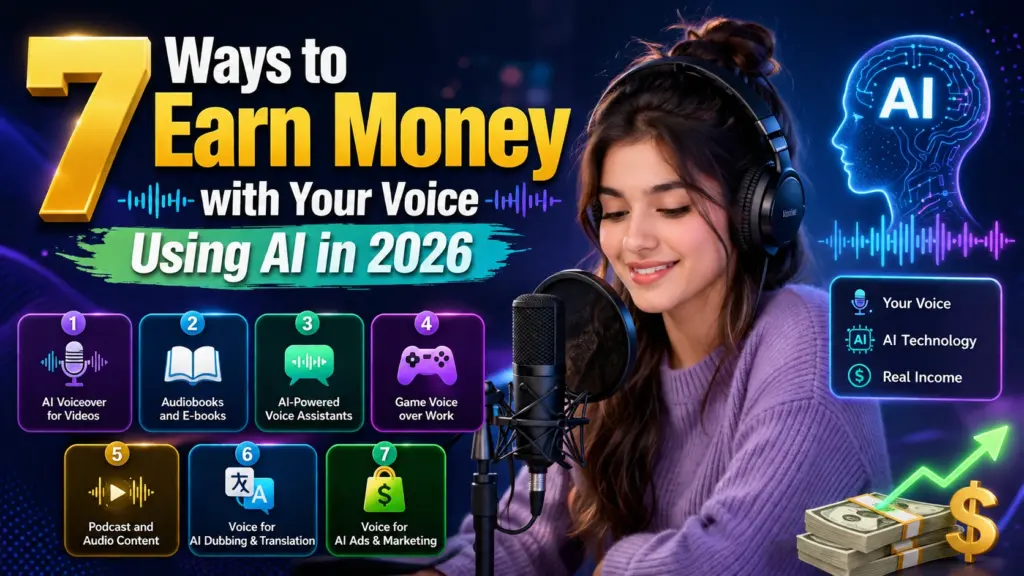
Artificial intelligence is creating new opportunities for freelancers, creators, and remote workers around the world. One growing area is voice licensing, where individuals can record speech samples that may be used to train AI voice models or provide licensed synthetic voice services for approved commercial projects.
Unlike traditional voice acting, many AI voice platforms allow beginners to participate without professional studio equipment or previous industry experience. While building a successful profile still requires time and effort, voice licensing has become an interesting option for people looking to diversify their online income.
In this guide, you’ll learn how AI voice platforms work, how voice licensing differs from traditional voice-over work, important privacy considerations, and practical ways to build income using your voice in 2026.
Disclaimer: This article is for educational purposes only. Earnings, platform availability, and payment structures vary between companies. Always review platform terms, licensing agreements, and privacy policies before uploading your voice data.
What Is AI Voice Licensing?
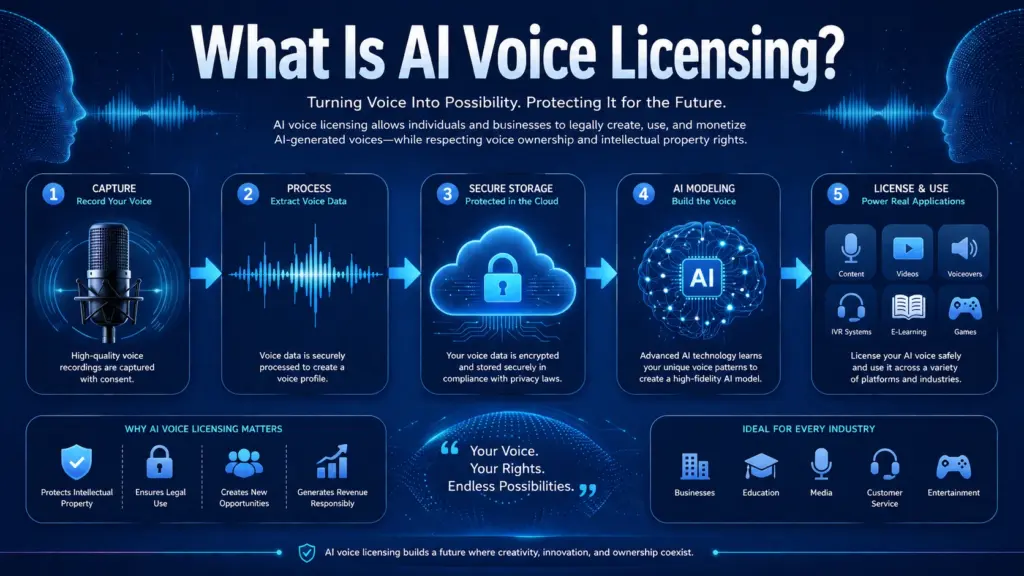
AI voice licensing is the process of allowing an approved platform or company to create a digital voice model based on recorded speech samples.
Depending on the platform’s policies and your agreement, licensed voices may be used for applications such as:
- Educational content
- Audiobooks
- Customer support systems
- Business training materials
- Accessibility tools
- Video production
- Digital assistants
Many platforms require your consent before your voice is used for commercial purposes, making it important to read every agreement carefully.
Why Is Demand Growing?
Businesses increasingly produce digital content for customers across multiple countries and languages.
Instead of recording every script manually, some organisations use licensed AI voice technology to create narration more efficiently.
Growth in areas such as:
- Online education
- Corporate training
- Podcasts
- Audiobooks
- Mobile applications
- Accessibility technology
has increased demand for legally licensed voice datasets and synthetic voice services.
1. Join Trusted AI Voice Platforms
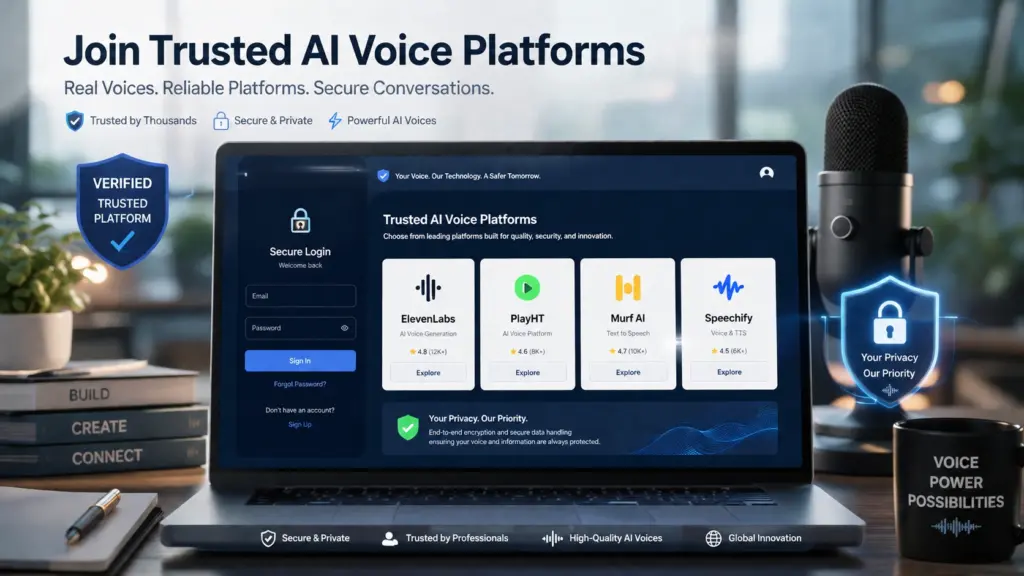
The first step is choosing a reputable company that clearly explains how your recordings will be stored, licensed, and used.
Before registering, review:
Privacy Policy
Understand how your recordings are collected, stored, and protected.
Licensing Terms
Check whether your agreement is exclusive or non-exclusive.
A non-exclusive agreement may allow you to work with multiple approved platforms, depending on each company’s terms.
Payment Structure
Different companies compensate contributors in different ways.
Some may offer:
- Fixed recording payments
- Project-based compensation
- Usage-based royalties
- Revenue-sharing programs
Always confirm payment details before submitting recordings.
2. Protect Your Voice Rights
Your voice is a unique personal asset.
Before accepting any agreement, carefully review:
Commercial Usage
Understand exactly where your voice may be used.
Some platforms allow commercial licensing, while others limit recordings to research or internal AI training.
Content Restrictions
Choose platforms that provide clear policies preventing unauthorised use in misleading, illegal, or harmful content.
Account Security
Use strong passwords and enable available security features to help protect your account and personal information.
3. Create High-Quality Voice Recordings
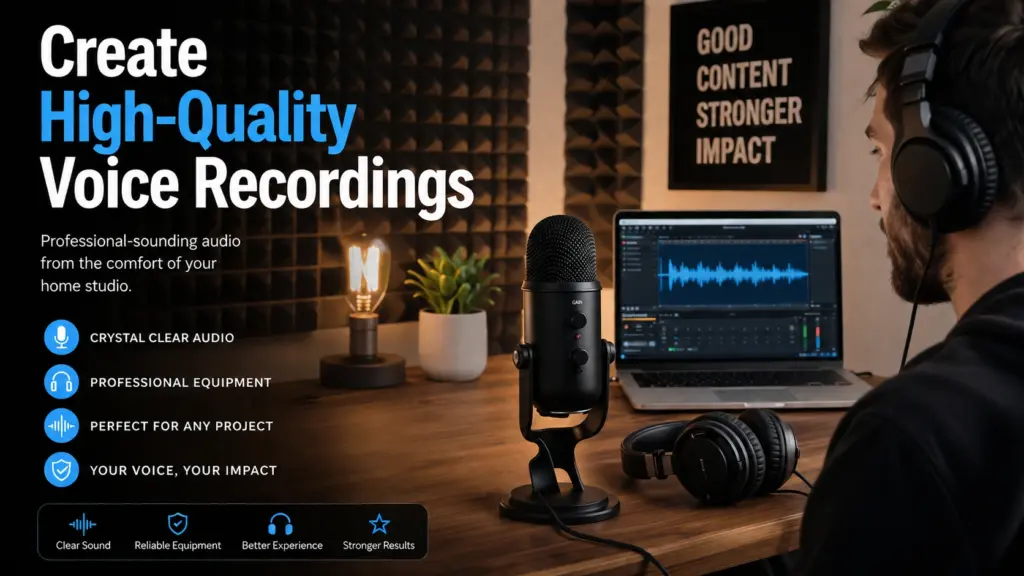
Professional recording equipment can improve audio quality, but many platforms also accept recordings made with good consumer microphones in a quiet environment.
To improve recording quality:
- Choose a quiet room.
- Reduce background noise.
- Speak naturally.
- Maintain consistent microphone distance.
- Follow recording instructions carefully.
Clear recordings may improve the review process and increase opportunities for future projects.
4. Explore Freelance Voice-Over Opportunities
AI voice licensing is only one way to earn money with your voice. Many freelancers also offer traditional voice-over services for businesses, educators, content creators, and marketing agencies.
Freelance voice work often includes:
- YouTube narration
- Explainer videos
- Corporate presentations
- E-learning courses
- Podcast intros
- Audiobooks
- Mobile app narration
Combining AI voice licensing with freelance projects can help diversify your income rather than relying on a single platform.
Build a Professional Portfolio
A simple portfolio helps potential clients understand your voice style and experience.
Consider including:
- Short narration samples
- Different speaking styles
- Language options
- Previous projects (if permitted)
- Audio quality examples
Keep your portfolio updated as you complete new work.
5. Increase Opportunities with Multiple Languages
If you can speak more than one language fluently, you may qualify for additional voice projects.
Many companies develop products for international audiences and look for voice contributors who can record content in multiple languages or regional accents.
Examples include:
- English
- Hindi
- Spanish
- French
- German
- Arabic
- Japanese
Language skills alone do not guarantee higher earnings, but they may expand the number of projects available on certain platforms.
Always check each platform’s language requirements before applying.
6. Work with Independent Creators
Large companies aren’t the only clients looking for voice talent.
Independent creators frequently need narration for:
- YouTube videos
- Educational courses
- Audiobooks
- Mobile games
- Podcasts
- Product demonstrations
- Business presentations
Many creators prefer working with freelancers because it offers flexibility and allows them to find voices that match their project style.
Providing clear communication, meeting deadlines, and delivering consistent quality can help build long-term client relationships.
7. Build Long-Term Relationships with Enterprise Clients
As your experience grows, you may receive invitations to work on larger commercial projects.
Enterprise clients often look for voice contributors who demonstrate:
Consistent Audio Quality
Using the same microphone setup and recording environment helps maintain a professional sound across projects.
Reliable Communication
Responding promptly and following project instructions builds trust with clients.
Professional Conduct
Meeting deadlines, respecting confidentiality agreements, and maintaining accurate records can improve your reputation over time.
Long-term business relationships often develop through reliability rather than simply offering the lowest price.
Tips for Better Voice Recordings
You don’t necessarily need an expensive recording studio to produce clear audio.
Simple improvements can make a noticeable difference.
Choose a Quiet Recording Space
Record in a room with minimal background noise.
Soft furnishings such as curtains, carpets, or clothing inside a wardrobe can help reduce echo.
Speak Naturally
Avoid forcing your voice or imitating another speaker.
Many clients prefer clear, conversational speech because it sounds more authentic.
Maintain Consistent Volume
Try to keep your speaking volume steady throughout the recording.
Large changes in loudness can make editing more difficult.
Follow Platform Guidelines
Every voice platform has its own recording standards.
Carefully read the instructions regarding:
- File format
- Sample rate
- Recording length
- Noise limits
- Naming conventions
Following these requirements may reduce delays during the review process.
Understand How Payments Work
Different companies use different compensation models.
Depending on the platform, contributors may receive:
- Fixed payments per project
- Hourly compensation
- Usage-based royalties
- Revenue-sharing arrangements
Payment methods also vary.
Some platforms support:
- PayPal
- Direct bank transfer
- Payoneer
- Other supported payment services
Before joining any platform, review its payment schedule, minimum payout amount, and supported payment methods.
Diversify Your Online Income
While voice licensing can be an interesting opportunity, relying on a single income source may increase financial risk.
Many freelancers combine voice work with other online activities such as:
- Freelance writing
- Affiliate marketing
- Blogging
- YouTube content creation
- Selling digital products
- Online consulting
Diversifying your income sources may provide greater financial stability over time.
Common Mistakes to Avoid
Many beginners become excited about AI voice technology and immediately upload recordings without understanding how voice licensing works. Taking a few precautions can help protect both your privacy and your earning potential.
Uploading Recordings to Unknown Websites
Not every website that requests voice samples is trustworthy.
Before creating an account, research the company and review:
- Privacy Policy
- Terms of Service
- User reviews
- Payment history
- Data security practices
Choose platforms that clearly explain how your recordings will be stored and used.
Ignoring Licensing Agreements
Your voice is personal intellectual property.
Before accepting any agreement, understand:
- Whether the license is exclusive or non-exclusive
- How long the agreement remains active
- Where your voice may be used
- Whether commercial usage is permitted
- If you can request removal of your recordings
Reading the agreement carefully can help you avoid misunderstandings later.
Expecting Immediate Income
AI voice licensing should be viewed as one of many possible online income opportunities—not as guaranteed income.
The number of available projects may depend on factors such as:
- Platform demand
- Language availability
- Voice quality
- Client requirements
- Market conditions
Building a profile and gaining experience often takes time.
Using Poor Audio Quality
Even if a platform accepts beginner contributors, poor audio quality can reduce your chances of approval.
Avoid:
- Background noise
- Echo
- Microphone handling sounds
- Loud fans or traffic noise
- Inconsistent speaking volume
Taking a few extra minutes to improve recording quality can make a noticeable difference.
Protect Your Privacy
Because your voice is unique, protecting your personal information is just as important as protecting other digital assets.
Consider these best practices:
Use Strong Account Security
- Enable two-factor authentication if available.
- Use unique passwords.
- Update login credentials regularly.
Share Only Necessary Information
Only provide personal information requested through legitimate onboarding or payment verification processes.
Avoid sharing unnecessary identity documents through unofficial communication channels.
Monitor Your Accounts
Review your contributor dashboard periodically for:
- Payment history
- Project activity
- Account notifications
- Security alerts
Reporting suspicious activity quickly can help protect your account.
AI Voice Technology and Ethical Considerations
Artificial intelligence offers many opportunities, but responsible use remains essential.
Both companies and contributors should prioritise:
- User consent
- Transparent licensing
- Privacy protection
- Responsible commercial use
- Compliance with applicable laws
Supporting ethical AI practices helps build trust across the industry.
Build Your Personal Brand
Whether you work through AI voice platforms or traditional freelance marketplaces, your professional reputation matters.
Ways to strengthen your profile include:
Complete Your Profile
Add:
- Professional photo (if appropriate)
- Short biography
- Languages spoken
- Voice style descriptions
- Recording equipment (if relevant)
A complete profile often appears more professional to potential clients.
Deliver Consistent Quality
Clients appreciate contributors who:
- Meet deadlines
- Communicate clearly
- Follow instructions
- Deliver clean recordings
Reliability can lead to repeat opportunities and positive reviews.
Continue Improving Your Skills
Voice work is a skill that improves with practice.
Consider learning about:
- Voice control
- Microphone techniques
- Audio editing basics
- Script interpretation
- Public speaking
Continuous improvement may increase the range of projects you’re qualified for.
AI Voice Licensing vs Traditional Voice Acting
Although both involve voice recordings, they often serve different purposes.
| AI Voice Licensing | Traditional Voice Acting |
| May involve creating a licensed digital voice model | Requires recording each project individually |
| Often focuses on AI-generated speech | Focuses on live performance and acting |
| Can support automated content creation | Used for commercials, films, games, and animation |
| Licensing terms vary by platform | Usually negotiated per project |
Some professionals choose to work in both areas depending on their interests and experience.
Think Long-Term
Technology continues to evolve, and opportunities within AI voice services are likely to change over time.
Rather than focusing only on short-term earnings, consider building a sustainable freelance career by:
- Developing strong communication skills
- Learning about new AI tools
- Maintaining high-quality recordings
- Expanding your language abilities
- Diversifying your online income sources
A long-term approach can help you adapt as the industry evolves.
Conclusion
Artificial intelligence is opening new opportunities for people who want to work online, and voice licensing is one area that continues to evolve. While it is not a guaranteed source of income, it can be an option for freelancers, creators, and individuals interested in exploring new digital opportunities.
Success in this field depends on choosing reputable platforms, protecting your voice rights, creating high-quality recordings, and maintaining a professional approach. As with any online income opportunity, it’s important to understand the terms of service, privacy policies, and payment structures before participating.
Whether you decide to explore AI voice licensing alongside freelance voice-over work or as part of a broader online business strategy, building your skills and diversifying your income sources can support long-term financial growth.
Frequently Asked Questions (FAQs)
How can beginners earn money with their voice?
Beginners can start by joining reputable AI voice or freelance voice-over platforms that accept new contributors. Most platforms require voice samples, profile verification, and compliance with their recording guidelines before offering projects.
Is AI voice licensing the same as traditional voice acting?
No. Traditional voice acting usually involves recording scripts for individual projects. In contrast, AI voice licensing may involve creating a digital voice model that can be licensed according to the platform’s terms and your agreement.
Do I need professional recording equipment?
Not necessarily. Many platforms accept recordings made with good-quality consumer microphones in a quiet environment. However, clearer recordings generally improve the overall quality of your submissions.
Can I work with multiple voice platforms?
Some companies allow contributors to work with multiple platforms through non-exclusive agreements, while others may require exclusivity. Always review the platform’s licensing terms before joining.
How are contributors paid?
Payment methods vary by platform. Depending on the company, contributors may receive fixed project payments, usage-based royalties, or other compensation models. Supported payment methods may include PayPal, direct bank transfer, Payoneer, or other approved services.
Is AI voice licensing safe?
Working with established companies that clearly explain their privacy policies, licensing agreements, and data protection practices may reduce risks. Always review platform policies carefully before uploading your recordings.
Can speaking multiple languages increase opportunities?
In some cases, multilingual contributors may qualify for a wider range of projects. However, project availability depends on client demand and each platform’s specific requirements.
What should I check before joining a platform?
Before registering, review:
- Privacy Policy
- Terms of Service
- Licensing Agreement
- Payment Schedule
- User Reviews
- Supported Countries
- Customer Support Options
Understanding these details can help you make informed decisions.
Key Takeaways
- AI voice licensing is an emerging online opportunity.
- Choose reputable platforms with transparent licensing policies.
- Protect your voice rights by reading agreements carefully.
- Focus on creating clear, high-quality recordings.
- Build a professional portfolio to improve credibility.
- Diversify your online income instead of relying on a single platform.
- Continue improving your communication and recording skills.
- Stay informed about changes in AI technology and platform policies.
Official Sources
Use these official resources to learn more:
- ElevenLabs
https://elevenlabs.io/ - Voice123
https://voice123.com/ - PayPal
https://www.paypal.com/ - Federal Trade Commission (FTC)
https://www.ftc.gov/ - U.S. Copyright Office
https://www.copyright.gov/ - National Institute of Standards and Technology (NIST) – AI Resources
https://www.nist.gov/artificial-intelligence
Internal Linking Suggestions
Link this article to related content on your website:
- Best Passive Income Ideas in the USA for 2026
- Best Personal Finance Tips for Beginners
- Personal Finance Money Management Guide
- How to Raise Your Credit Score Fast
- Top AI Stocks to Watch in 2026
About the Author
Mehul Patel is the founder of Solvibex.com, where he publishes research-based articles on personal finance, artificial intelligence, online business ideas, and digital technology. His goal is to help readers understand complex topics through practical, easy-to-follow guides.
Disclaimer
This article is provided for educational and informational purposes only. It does not guarantee earnings or business success. Platform availability, payment structures, eligibility requirements, and licensing terms may change over time. Always review official platform documentation and conduct your own research before participating in any online earning opportunity.